
Mod Node
Gaming Optimization Suite
1M+
Downloads
99.9%
Uptime
24/7
Support
Gaming Optimization Suite
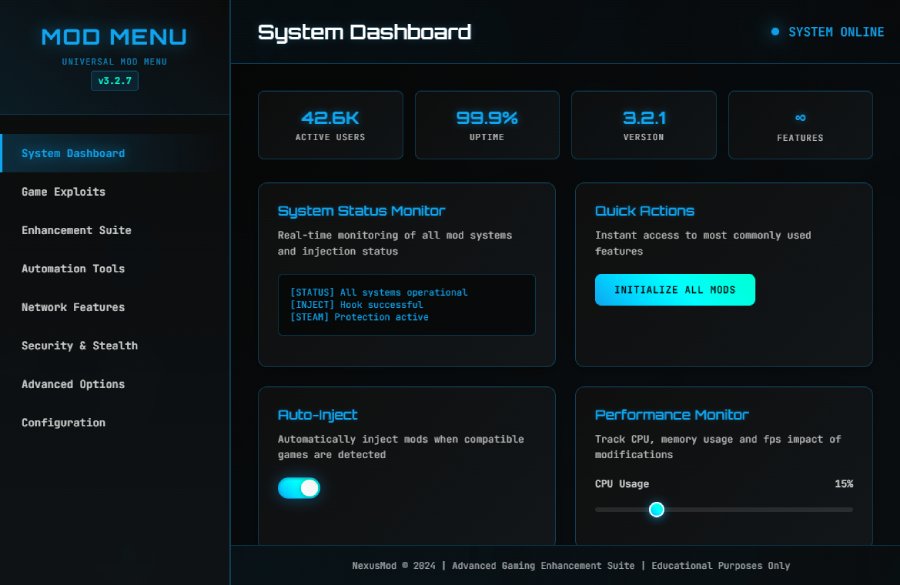
Competitive gameplay optimization, FPS tweaks, graphics settings, and troubleshooting guides for smoother Dota 2 gameplay.
Improve gameplay smoothness and reduce FPS drops using tested settings.
Reduce input lag and improve responsiveness for competitive matches.
Troubleshooting methods for lag spikes, stuttering, and unstable frametimes.
The Mod Node Dota 2 Mod Menu is built for PC gamers looking for advanced customization features and optimized gameplay tools. Designed specifically for Windows 10 and Windows 11, the application focuses on lightweight performance and fast installation.
Dota 2 players use Mod Node to improve customization, streamline gameplay settings and access advanced enhancement features within supported environments. The installer is designed to be simple to use while maintaining fast launch speeds and stable performance.
With frequent updates and compatibility improvements, Mod Node remains optimized for modern Dota 2 versions and competitive MOBA gameplay environments.
Performance optimization pages for FPS, graphics settings, lag fixes, and troubleshooting.
Yes. Mod Node is available as a free download for supported PC users.
Yes. The Dota 2 Mod Menu supports both Windows 10 and Windows 11.
Download the ZIP archive, extract the files and run the installer as administrator.
These settings and optimization tips are AI-assisted and designed to improve FPS, reduce stuttering, lower latency, and deliver smoother gameplay across low-end and high-end gaming PCs.
This guide includes AI-assisted FPS optimization recommendations, graphics tuning methods, and gaming performance improvements designed for modern NVIDIA and AMD gaming PCs.
Enable Windows Game Mode, disable unnecessary overlays, update GPU drivers, and optimize startup applications for improved gaming performance.
Use High Performance power plans, reduce background CPU usage, and optimize graphics driver settings to improve frametime stability and reduce input latency.
These AI-assisted optimization methods help reduce shader stutter, improve FPS stability, and optimize gaming responsiveness across modern gaming PCs.
Optimize NVIDIA Control Panel and AMD Radeon settings for lower latency, improved FPS stability, reduced stuttering, and smoother gameplay performance.
Recommended GPU optimizations include low latency mode, shader cache optimization, anti-lag technologies, and optimized texture filtering settings.
| Preset | Average FPS |
|---|---|
| Low Settings | 240 FPS |
| Medium Settings | 180 FPS |
| High Settings | 120 FPS |
These optimization methods are tested using AI-assisted gaming analysis, modern gaming hardware, competitive gaming benchmarks, and real-world PC performance testing.
Settings are designed to improve frametime stability, reduce input latency, optimize GPU utilization, and improve gameplay responsiveness across low-end and high-end PCs.
Optimized settings for GTX 1650, RTX 3050, RX 6600, and lower-end gaming PCs targeting stable FPS and reduced stuttering.
Optimized competitive settings for RTX 4070, RTX 4080, RX 7900 XT, and high refresh rate gaming monitors.
1% Lows: Measures minimum FPS stability during gameplay.
Frametime Stability: Helps reduce microstutter and improve smoothness.
Input Latency: Time between user input and on-screen response.
Shader Compilation: Background shader loading that may cause stutter.
GPU Utilization: Measures graphics card workload efficiency.
Common gaming performance issues include shader compilation stutter, VRAM overflow, CPU bottlenecks, unstable frametimes, background process interference, and outdated GPU drivers.
AI-assisted optimization methods can help reduce stuttering, improve frametime consistency, stabilize FPS, and improve overall gameplay responsiveness.
Competitive gaming settings prioritize low input latency, high FPS stability, improved frametime consistency, and reduced visual distractions for esports gameplay.
Recommended competitive optimizations include reduced shadows, optimized texture filtering, NVIDIA Reflex, AMD Anti-Lag, and low latency graphics configurations.
Streaming gameplay can increase CPU usage, frametime instability, and GPU load. Optimized streamer settings help maintain stable FPS while recording or broadcasting gameplay.
Recommended settings prioritize GPU encoder optimization, reduced CPU bottlenecks, and stable rendering performance for OBS and streaming software.
Optimization methods are regularly updated for new game patches, graphics driver updates, Windows gaming optimizations, and modern NVIDIA and AMD hardware improvements.
Updated optimization recommendations include AI-assisted performance tuning, reduced shader stutter fixes, and improved competitive gaming responsiveness.
Modern game engines including Unreal Engine 5, Source 2, Unity, and proprietary rendering engines can impact shader compilation, VRAM usage, CPU thread scheduling, and frametime stability.
AI-assisted optimization methods help reduce rendering bottlenecks, improve shader cache efficiency, and optimize engine-level performance behavior.
What is frametime? Frametime measures frame delivery consistency and directly impacts gameplay smoothness.
What causes shader stutter? Shader compilation and cache generation can temporarily reduce FPS and create microstutter.
What is input latency? Input latency measures the delay between user actions and on-screen responsiveness.
Lower shadows, reduce render distance, optimize texture filtering, enable low latency technologies, and optimize Windows gaming settings for improved FPS stability and smoother gameplay performance.
| Preset | Performance | Visual Quality |
|---|---|---|
| Competitive Settings | Highest FPS | Low Visual Effects |
| Epic Settings | Lower FPS | Maximum Graphics Quality |
Best settings for RTX 3060 and RTX 4060 gaming PCs prioritize high FPS stability, reduced shader stutter, and improved frametime consistency.
Optimized settings for GTX 1650, RX 6600, and Ryzen gaming systems help improve gameplay smoothness while reducing CPU bottlenecks and VRAM usage.
Performance testing includes FPS analysis, frametime monitoring, GPU utilization testing, and gameplay responsiveness measurements across modern gaming hardware.
AI-assisted optimization methods are combined with real-world gameplay testing to improve low latency gaming performance, reduce stuttering, and optimize competitive gameplay responsiveness.
Reduce lag in dota2 by lowering unnecessary background usage, disabling overlays and optimizing GPU scheduling settings.
Frame stuttering in dota2 can often be reduced by enabling fullscreen mode, updating graphics drivers and lowering VRAM-heavy settings.
Enable low latency mode, set power management to maximum performance and optimize shader cache settings for smoother gameplay in dota2.
Use AMD Anti-Lag, optimize Radeon settings and disable unnecessary post-processing effects to improve responsiveness in dota2.
Lower shadows, view distance and texture filtering to increase FPS and improve stability on lower-end hardware while playing dota2.
Disable V-Sync, reduce buffering settings and use fullscreen exclusive mode to lower input latency in dota2.
Launch options can improve startup performance, reduce background rendering and optimize CPU usage in dota2.
Editing config files and reducing unnecessary visual effects can improve frame pacing and stabilize FPS in dota2.
Disable Xbox Game Bar, optimize power plans and reduce startup applications to improve gaming performance for dota2.
Optimize graphics settings, reduce unnecessary background usage and improve frame pacing for smoother gameplay in dota2.
Reducing demanding graphics settings and optimizing system performance can improve FPS and responsiveness in dota2.
Learn how to improve FPS, reduce lag spikes and optimize graphics settings for smoother gameplay in dota2.
Optimize dota2 for older hardware by lowering demanding graphics settings and reducing background CPU usage.
Reduce latency and improve responsiveness using optimized NVIDIA, AMD and Windows settings for dota2.
Configure NVIDIA Control Panel settings for maximum FPS and lower input latency while playing dota2.